

How Private Tutors Can Handle High-Pressure Parents with Professional Grace
A practical guide for private tutors to navigate parental concerns, set realistic diagnostic milestones, establish communication boundaries, and discuss fees professionally.
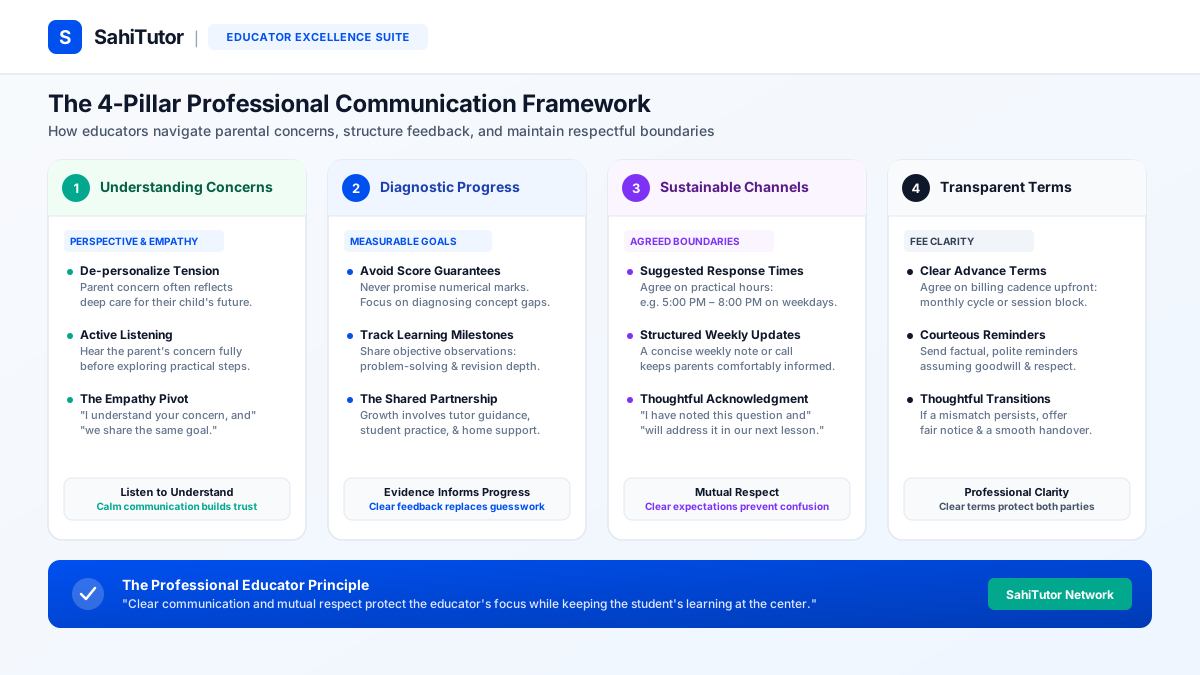
- 1. Understanding High-Pressure Moments: Anxiety, Investment & Legitimate Concerns
- 2. Addressing Score Expectations: Shifting from Guarantees to Measurable Progress
- 3. Establishing Sustainable Communication Channels & Response Boundaries
- 4. Discussing Fees & Billing Terms with Calm Professionalism
- 5. Navigating Persistent Friction & Disengaging Thoughtfully
- 6. Practical Communication Frameworks & Sample Scripts
Private tutoring operates in an environment of high personal stakes. Families invest significant emotional energy, time, and family resources into their children's education, particularly around board exams, competitive entrance milestones, or sudden dips in school grades. When a parent reaches out late at night or questions why their child hasn't jumped two grade levels within weeks, an educator's immediate reaction might be defensive anxiety or frustration.
However, experienced educators recognize that intense parental check-ins rarely stem from deliberate hostility toward the tutor. In most instances, heightened scrutiny is a parent's reaction to academic uncertainty and fear that their child might fall behind in a competitive school system. Wanting regular progress updates, asking about upcoming tests, and seeking assurance that tutoring is helping are natural parental instincts.
At the same time, legitimate parental concern can become stressful when communication is reactive, unstructured, or emotional. Recognizing the underlying care driving the parent's questions allows you to step back from emotional defensiveness and respond with calm, structured reassurance as a thoughtful educational partner.
When a parent expresses intense concern, responding defensively escalates friction. Responding with prompt, factual observations and a structured update plan restores collaboration.
A frequent challenge private educators encounter is pressure to guarantee specific examination scores. During initial consultations, parents may ask, 'Can you promise my child will secure 95% in Board Maths?' While it may be tempting for a tutor to offer comforting promises to secure the engagement, making unilateral score guarantees is pedagogically unsound.
A student's eventual examination mark depends on a complex combination of factors: instructional clarity from the tutor, independent self-study discipline, homework completion, foundational gaps from earlier grades, exam-day composure, and school marking standards. As a tutor, you can guarantee professional lesson preparation, rigorous concept breakdowns, targeted problem sets, and diagnostic feedback—but you cannot control exam-day performance or how consistently a student revises independently.
The professional approach is to guide parents toward measurable diagnostic milestones rather than speculative numerical promises. Explain that steady learning is built on observable inputs: closing specific conceptual gaps, increasing independent problem-solving accuracy, and developing disciplined study habits. When parents understand how progress is tracked and reviewed, they gain genuine confidence grounded in evidence rather than empty promises.
Messaging applications like WhatsApp have made staying in touch effortless, but without shared expectations, messages arriving late at night or during personal hours can quickly lead to tutor fatigue. Tutors who feel compelled to answer immediately around the clock often find their teaching energy depleted during actual lessons.
Setting healthy communication boundaries is not about being unavailable; it ensures that communication remains deliberate, thoughtful, and effective. When parents know when and how to reach you, they feel respected, and educators can give their full, uninterrupted attention to each student during teaching hours.
Agree on practical communication channels and reasonable response windows early in the arrangement. For example, some educators suggest a response window such as 4:00 PM to 8:00 PM on weekdays, outside active lessons. Urgent logistical matters regarding session timing or student safety should always have an immediate protocol, while subject-matter questions can be acknowledged courteously and addressed thoroughly during the next scheduled class.
Discussing finances can feel uncomfortable, particularly because private tutoring takes place in an intimate setting—either in a family's home or through personalized 1-on-1 online classes. When monthly dues are delayed, educators sometimes hesitate to bring the matter up, leading to unaddressed tension and awkwardness during subsequent lessons.
The most effective way to eliminate friction is through clear, advance commercial agreements. Before regular sessions begin, establish the fee schedule in writing—specifying whether billing follows a monthly advance cycle, a completed block of sessions (e.g. every 8 or 10 classes), or another mutually agreed schedule. Agreeing on payment dates upfront removes ambiguity for both parties.
When a payment date passes, send a courteous, factual reminder. Treat billing inquiries as standard administrative maintenance rather than personal confrontations. Always assume good faith, state the cycle dates clearly, provide payment details, and promptly send a note of thanks once the fee is confirmed.
Tutoring is a professional educational commitment. Communicating payment schedules clearly and sending courteous, factual reminders protects the relationship and ensures mutual peace of mind.
In the vast majority of cases, clear communication, empathy, and regular progress reports establish a productive partnership between tutors and families. However, tutors occasionally encounter situations where fundamental expectations cannot be reconciled.
Signs of an unsustainable arrangement include persistent hostility or verbal disrespect, chronic last-minute cancellations without regard for the educator's schedule, repeated refusal to settle agreed fees, or an environment where a student is placed under severe emotional distress during lessons. In such situations, attempting to continue often compromises both the student's emotional well-being and the educator's ability to teach effectively.
When an arrangement becomes untenable despite polite efforts to address the issues, stepping aside thoughtfully is the most responsible course. Provide fair advance notice—typically one to two weeks, or concluding the current agreed block of sessions, unless safety concerns require immediate cessation. Always provide a clear, constructive summary of topics covered and recommended next steps to support the student's transition to another teacher.
Having calm, structured language ready helps educators respond thoughtfully when high-pressure situations arise. Important Guidance for Educators: The sample scripts below use illustrative placeholders in brackets (such as [Parent Name], [Student Name], and [Chapter/Topic]). Always adapt these templates to reflect your actual session history, agreed terms, and real observations. Never claim that a test, lesson, or diagnostic review took place unless it actually occurred.
Scenario A: Addressing Night-Before Examination Inquiries Context: A parent sends an anxious message the evening before an upcoming school test asking if the student is ready. Sample Script: 'Good morning, [Parent Name]. I received your message regarding today's [Subject] assessment. In our recent sessions on [Days/Dates], [Student Name] practiced the key concepts from [Specific Chapters] with good concentration. Please encourage them to read each question calmly and take their time. I look forward to hearing how they felt about the paper during our next class on [Next Class Date].'
Scenario B: Explaining Progress When Grades Have Not Risen Immediately Context: A parent expresses concern that test scores have not shown an immediate jump after the first few weeks. Sample Script: 'Dear [Parent Name], I completely understand your concern and appreciate you sharing it. When we began, our diagnostic priority was strengthening foundational concepts in [Topic A and Topic B], where [Student Name] has shown encouraging progress during our practice problem sets. Translating conceptual understanding into timed exam marks takes practice, particularly in calculation speed and independent problem solving without notes. Let us schedule a brief 10-minute phone call on [Day] at [Time] to review their recent work and coordinate our focus areas.'
Scenario C: Routine, Courteous Fee Settlement Reminder Context: A scheduled tuition cycle has concluded and payment has not been received after the agreed due date. Sample Script: 'Dear [Parent Name], I hope you are having a productive week. This is a gentle reminder that our tuition cycle for [Month / Number of Sessions] concluded on [Agreed Date] as per our schedule. I have attached the session dates and payment details below for your convenience. Please confirm once settled so I can update my records. Thank you!'
Scenario D: Thoughtful, Professional Disengagement Notice Context: Mutual efforts to resolve scheduling, communication, or commercial mismatches have proven unsuccessful, and you need to conclude the engagement. Sample Script: 'Dear [Parent Name], thank you for the opportunity to work with [Student Name] over the past [Duration/Months]. After reviewing my teaching schedule and current commitments, I will be concluding our tuition sessions after [Agreed Date / End of Next Week]. I will ensure our remaining [Number] sessions focus on consolidating our current work on [Topic]. I will also prepare a summary of chapters covered and suggestions for their next educator to ensure [Student Name]'s learning continues smoothly. I wish [Student Name] every success ahead.'
Looking to tutor with verified families who value quality mentorship? Apply to join the SahiTutor Educator Network.
Join SahiTutor's educator community. Register your subjects, set your teaching schedule, and access genuine home and online tuition opportunities across India.
Related Guides & Articles
View allHow to Nail Your First Demo Class: A Practical Guide for Home & Online Tutors
Essential tips and strategies for private tutors to convert demo classes into long-term tutoring assignments. Learn how to structure the first 45 minutes and impress parents.
How to Become a Verified Home & Online Tutor with SahiTutor: Complete Onboarding Guide
Complete guide to becoming a verified home or online tutor with SahiTutor. Learn about free registration, qualification review, trial demo classes, and teaching standards.
The Practical Tech Toolkit for 1-on-1 Online Tutors: Pen Tablets, Whiteboards & Clearer Digital Lessons
A practical hardware and software setup guide for educators teaching 1-on-1 online. Explore pen tablets, digital whiteboards, audio clarity, and file workflows.