
What to Share With a Tutor Before the First Lesson
Use this practical checklist to share a learner’s goals, current topics, sticking points, materials, schedule and lesson preferences before tutoring begins.
Start with the learning need
A first tutoring lesson is easier to shape when the tutor knows what the learner hopes to work on. You do not need a perfect diagnosis or a long report. A short, honest description is enough to begin a useful conversation.
Try to name the immediate need in the learner’s own words. It might be “I can follow the example, but I get lost when the numbers change,” “I know the science terms but struggle to explain them,” or “I want to practise speaking before my presentation.” A specific moment is more helpful than a label such as “bad at maths” or “weak in English.”
If the goal is still unclear, say so. You can describe what feels difficult, what is coming up at school, and what the learner would like to feel more confident doing. The tutor can ask follow-up questions; the family does not have to arrive with a complete plan.
Bring one real example
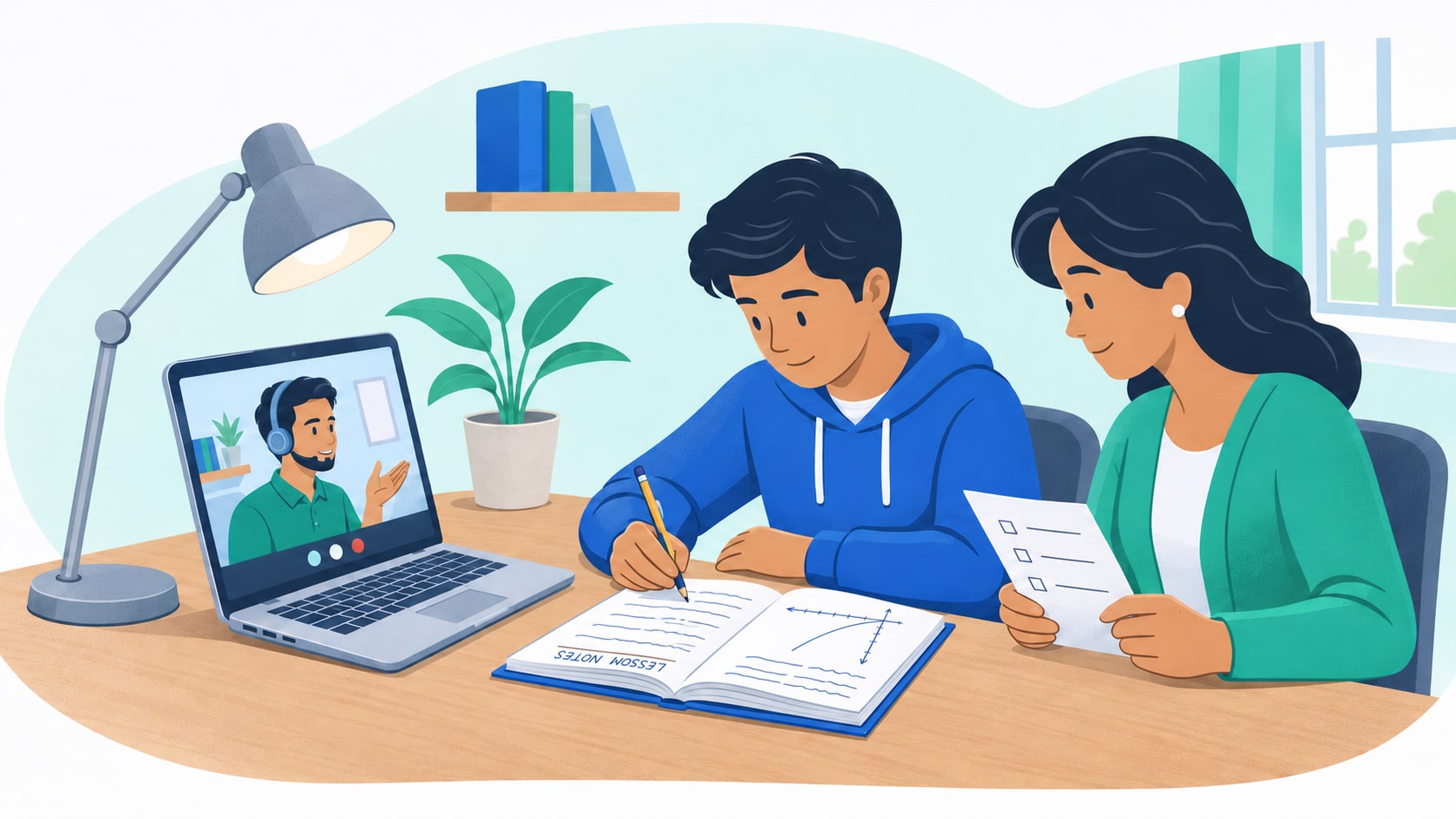
A recent piece of work can give the tutor a concrete place to start. Choose one question, paragraph, diagram, or assignment where the learner became unsure. Include the learner’s attempt, even if it is incomplete. The attempt can show what they understood and where their reasoning changed direction.
The goal is not to prepare a polished portfolio or to finish extra work before the lesson. One representative example is enough. If the student cannot identify a particular question, a topic they avoid or a step that feels confusing is a useful starting point.
Let the learner explain what they were thinking before anyone corrects the work. Parents can add context, but the student should have room to describe the difficulty in their own words. The tutor may choose a different starting point after talking with them.
- What did you understand at first?
- Where did you become unsure?
- What have you already tried?
- What would you like to be able to do next?
Agree on practical details
Share the practical details that could affect the lesson: preferred days and times, the learner’s time zone, and whether the session is online or in person. For an online lesson, check the device and connection in advance and decide which materials should be open or nearby. For an in-person lesson, agree on the location and what the learner should bring.
Tell the tutor about relevant preferences, such as whether the student is more comfortable speaking in a particular language or would rather try a problem before receiving hints. Treat these as useful starting points, not fixed assumptions about how every lesson must work.
If a parent wants to join the opening conversation, agree on that with the tutor and student. A brief introduction can clarify the goal; the learner should still have an opportunity to speak directly about what they need.
Use a simple pre-lesson checklist
You can send a short note before the lesson instead of assembling a formal document. Keep it to information that is relevant to the learning request, and avoid sending school account passwords, identification documents, or unrelated personal records.
After the introduction, ask the learner whether the plan still reflects what they want help with. If the tutor suggests adjusting the focus, discuss why and agree on a manageable first step together. A first session is a chance to understand the learner’s needs and decide what to work on next; it does not need to solve everything at once.
Looking for a suitable tutor for a subject, level, and lesson format? Share your learning needs with SahiTutor and discuss a free demo before deciding.
Submit a free requirement in under 60 seconds. We'll find qualified tutors matching your location, curriculum, and budget, and arrange a trial demo class.
Related Guides & Articles
View allHow to Choose the Right Home Tutor for Your Child: The Ultimate Parent Checklist (2026)
A step-by-step practical guide for parents on selecting the best home tutor or online tutor for CBSE, ICSE, or State Boards. Learn what questions to ask and how to evaluate demo classes.
How to Nail Your First Demo Class: A Practical Guide for Home & Online Tutors
Essential tips and strategies for private tutors to convert demo classes into long-term tutoring assignments. Learn how to structure the first 45 minutes and impress parents.
How to Balance School Homework and Home Tuition Without Overwhelming Your Child
A practical, evidence-assisted guide for parents and tutors to coordinate school assignments with private tuition, prevent unnecessary duplicate work, and protect student rest.