

How to Catch Up After Missing a Week of School
A practical catch-up plan for secondary-school students. Find missed work, choose what to do first, ask teachers clear questions and check your progress.
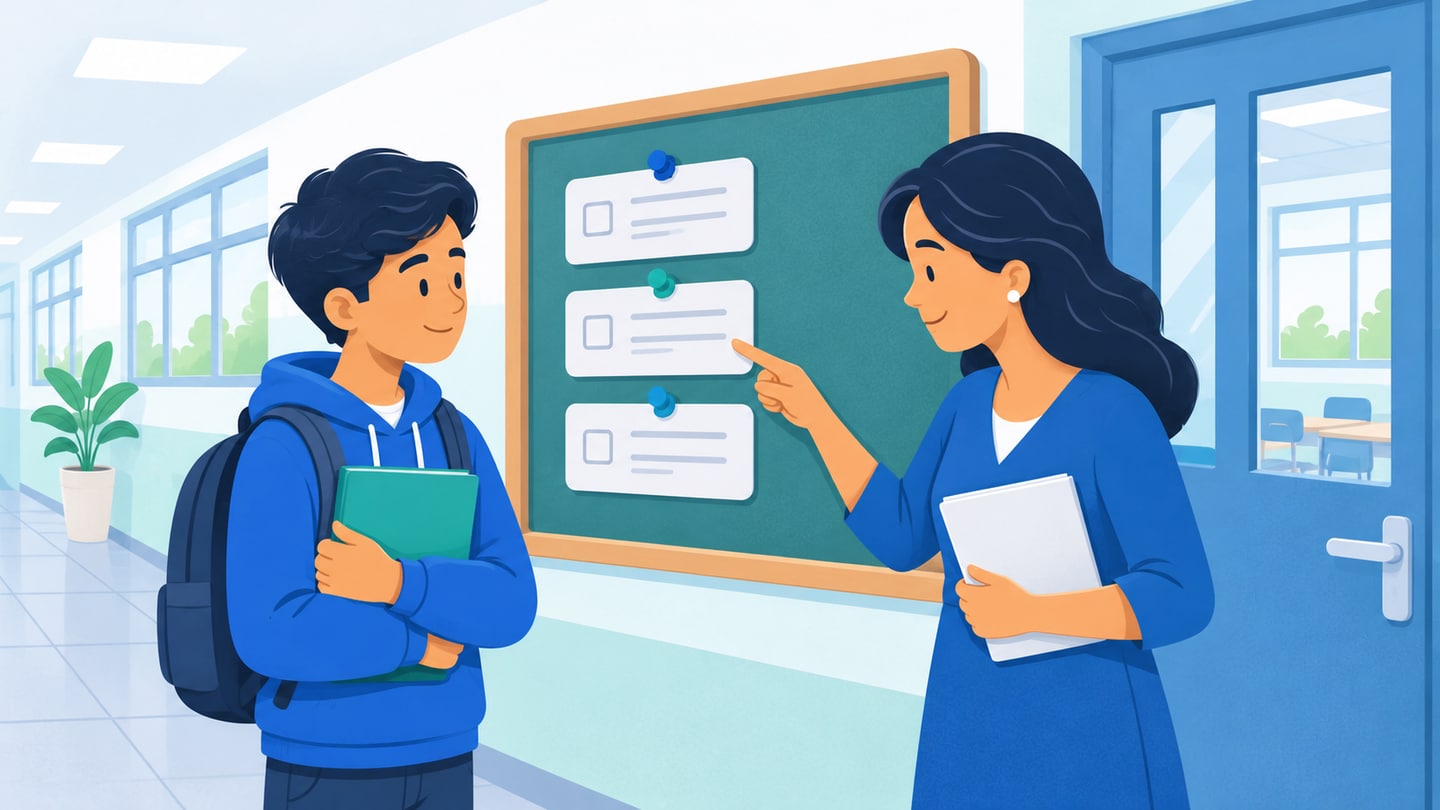
Find out what you missed in each subject
If you have missed a week of secondary school, start by finding out what was taught, what must be handed in and what the next lessons depend on. Make one short list across your subjects before trying to complete every task.
Check the class platform, homework diary and any messages from teachers. Ask a classmate which lesson topics you missed and where the materials are. Confirm unclear deadlines and required work with the teacher. A photo of someone else’s notes can help you find the topic, but you may still need the explanation or task instructions.
- For each subject, record the topic and where to find the materials.
- Write down any assignment or assessment you missed and its original deadline.
- Mark anything you cannot access or do not understand as a question to ask.
- Check whether a teacher has already given you a revised deadline or catch-up task.
Choose what needs attention first
Ask which missed learning is needed for your current lessons. Give that work a place beside any required assignment with an approaching deadline. If the two compete for the time you have, tell the relevant teacher and ask what to prioritise.
For example, imagine you missed three maths lessons on solving equations and a history lesson introducing a new topic. Tomorrow’s maths lesson uses those equations, while the history assignment is due next week. A possible first task is to learn one equation method and attempt two questions. Put the history reading into a later slot and check with both teachers that you have understood what is required.
Keep the task specific. “Finish all maths” gives you little guidance when you sit down. “Read the worked example, try two questions and flag the first step I cannot explain” gives you a finish line.
Ask for the explanation you are missing
Try a small part of the task so you can show where you get stuck. Bring the question, your attempt and any instructions you have. If you cannot start because the topic is completely new, say that directly and ask which example or explanation to begin with.
You could write, “I was away for the lessons on equations. I tried questions 1 and 2 using the example, but I cannot explain the step after removing the brackets. Which worked example should I review, and which questions should I finish before the next lesson?”
For a missed practical lesson, ask your teacher how to cover the learning or use the class results. Follow the school’s directions for practical work and any required supervision.
Fit catch-up tasks around your current schoolwork
Write your current assignments and commitments into the week, then choose the catch-up slots you can use. For each slot, name one task and what you will have at the end. You might plan a short maths attempt on Tuesday, history reading with three questions on Wednesday and a review of teacher feedback on Friday.
Leave space to move a task when new work arrives. If the plan still has more required work than available time, show the list to a teacher or your form tutor and ask for help agreeing a manageable order. A parent or carer can help you communicate the list if needed.
Our guide to turning a syllabus into a two-week revision plan shows how to break a broad topic into tasks. Adapt the example to the time you have and the work your teachers have asked for.
Check whether you can follow the next lesson
After a catch-up session, close the example and try a fresh question or explain the topic in your own words. Record what you can do independently and the question you still need answered. This gives you something concrete to discuss at the next lesson.
If the same gap keeps interrupting new work, ask about a further explanation, school support or a focused tutoring session. Share the missed topic and your attempt so the help can address the step you need.
Keep checking the list as teachers reply. Once you have agreed what to complete and can use the learning in class, move that item out of your catch-up list and continue with the current work.
If a missed topic keeps holding up new lessons, share your subject, level and the step you find difficult when discussing a tutor with SahiTutor.
Submit a free requirement in under 60 seconds. We'll find qualified tutors matching your location, curriculum, and budget, and arrange a trial demo class.
Related Guides & Articles
View allHow to Turn a Syllabus Into a Two-Week Revision Plan
Build a two-week revision plan from your syllabus. Pick topics to study first, fit practice around schoolwork, and update your plan using your answers.
How to Balance School Homework and Home Tuition Without Overwhelming Your Child
A practical, evidence-assisted guide for parents and tutors to coordinate school assignments with private tuition, prevent unnecessary duplicate work, and protect student rest.
What to Share With a Tutor Before the First Lesson
Use this practical checklist to share a learner’s goals, current topics, sticking points, materials, schedule and lesson preferences before tutoring begins.