

Does a Primary School Child (Classes 1–5) Really Need a Home Tutor? Honest Parent Guide
An honest evaluation of when primary school students (Classes 1–5) benefit from a home tutor for reading fluency and habits, and when self-directed play is enough.
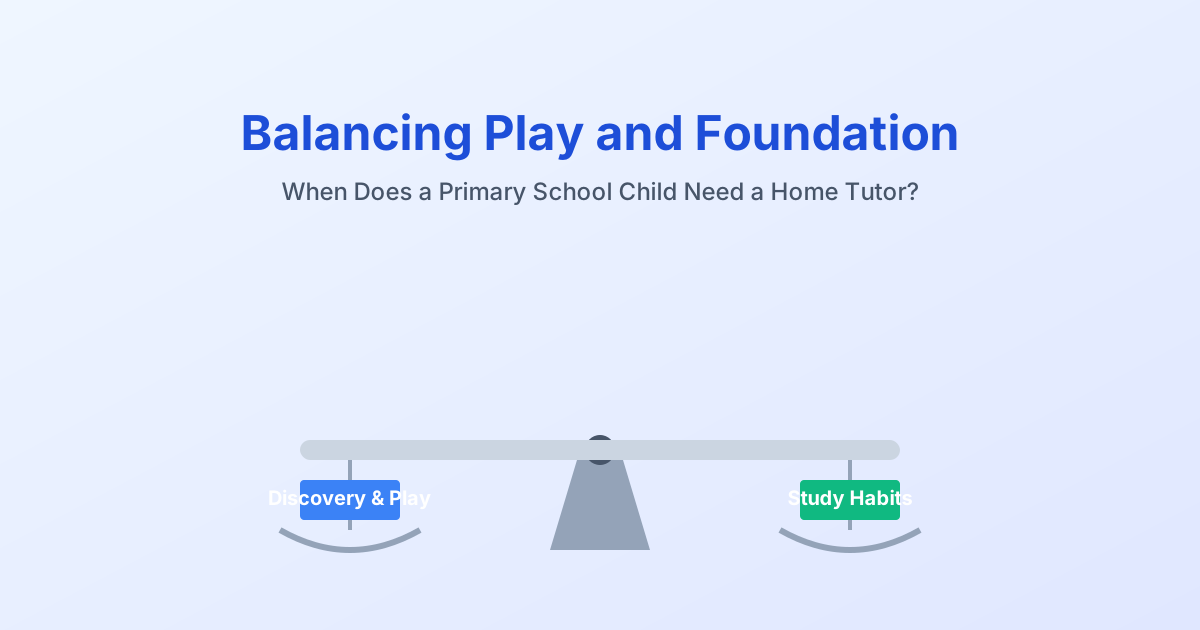
The Early Years Dilemma
One of the most common questions parents of primary school children (Classes 1–5) ask is whether their young child truly needs a private home tutor. In a highly competitive educational landscape, it is easy to feel pressure to start formal academic coaching as early as possible.
However, early childhood education experts and frameworks like the National Education Policy (NEP 2020) emphasize that the foundational years should focus on holistic development rather than rigorous academic drill. The decision to hire a tutor should be based on specific developmental needs rather than generalized anxiety.
When Self-Directed Play is Enough
For many children in early primary grades, formal tutoring is unnecessary. If a child is meeting basic developmental milestones, enjoys reading age-appropriate books, and demonstrates curiosity, additional academic pressure can sometimes be counterproductive.
Self-directed play, family reading time, and open-ended exploration are often the best tools for cognitive development in these early years. A supportive home environment that encourages inquiry is frequently all that is required.
Signs a Home Tutor Can Help
While play is crucial, there are specific scenarios where a 1-on-1 home tutor provides significant value. If a child is struggling persistently with reading fluency, phonics, or basic numerical concepts, early intervention can prevent these minor gaps from becoming major academic hurdles later on.
A tutor can also be highly beneficial for working parents who find it challenging to establish a consistent daily homework routine. In these cases, the tutor acts less as an academic lecturer and more as a patient guide helping to instill discipline and focus.
Building Foundational Habits
When a tutor is introduced at the primary level, their primary objective should not be to accelerate the child ahead of the syllabus. Instead, the focus should be on foundational habits: proper pencil grip, handwriting legibility, reading comprehension, and sitting comfortably for a focused 30-minute block.
SahiTutor emphasizes that primary foundation tutors must possess immense patience and an understanding of early childhood pedagogy, turning learning into an engaging activity rather than a chore.
Finding the Right Balance
Ultimately, the decision to hire a tutor for a primary school student is highly individual. It requires observing the child's emotional response to schoolwork and assessing the family's capacity to support early learning at home.
If you decide that extra support is needed, ensure the tutor prioritizes foundational confidence and patience over strict syllabus completion. A well-matched tutor can make a child feel capable and excited about their educational journey.
References & Authoritative Sources
To maintain factual integrity, SahiTutor grounds research-informed statements in official curriculum frameworks, educational examination boards, and peer-reviewed educational literature.
- National Education Policy 2020: Foundational Stage — Ministry of Education, Government of India (2020)
Supports: “Emphasizes the importance of play-based, discovery-based, and foundational learning in the early years.”
Looking for a patient, verified home tutor to help build your child's foundational reading and math skills? Book a free demo class with SahiTutor today.
Submit a free requirement in under 60 seconds. We'll find qualified tutors matching your location, curriculum, and budget, and arrange a trial demo class.
Related Guides & Articles
View allHow to Convert km/h to m/s in Physics Questions
Learn why you divide by 3.6 to convert km/h to m/s. Follow a worked physics question, avoid common unit mistakes and check your answers with three practice problems.
How to Balance Chemical Equations by Counting Atoms
Learn how to balance chemical equations by changing coefficients and counting atoms on both sides. Follow a worked example and check your own practice answer.
How to Review a Maths Mock Test and Plan Your Next Revision
Turn a marked maths mock test into a practical revision plan. Find the first wrong step, choose targeted practice and check your correction with a fresh question.